Self Authorship and the Lives we Inherit

One of the questions I've been sitting with lately is whether any of us begins by living a life that is entirely our own.
Long before we're old enough to decide what we value or who we hope to become, we're already learning what earns approval, what invites belonging, what feels safe, and what feels risky. We absorb ideas about what it means to be successful, lovable, responsible, desirable, ambitious, or "good." We learn them in our families, in our communities, in our relationships, and in the culture around us. Much of the time, we experience these stories as reflecting back the world we know, until life beings to create enough friction that we start to question the world as we thought it was, and the reliability of the stories we had internalized. For some of us, the friction is an internal misalignment or discomfort, but at other times the friction happens through contact with life.
When not questioned, over time those messages and inherited narratives become so familiar and are often so normalized, that they fuse with our experience of our own personality, our own identity, or at a larger scale, culture. They don’t feel like constructed narratives so much as, “The way things are.”
When I ask clients questions like, "Where do you think you first learned that?" or "Whose voice does that sound like?" I'm asking because it's much more difficult to feel we have the ability to act freely when we can't distinguish between our own voice and the voices we've spent a lifetime internalizing. Before we can decide whether a belief still belongs in our lives, we have to recognize that it is, in fact, a belief, and not necessarily a fact about who we are.
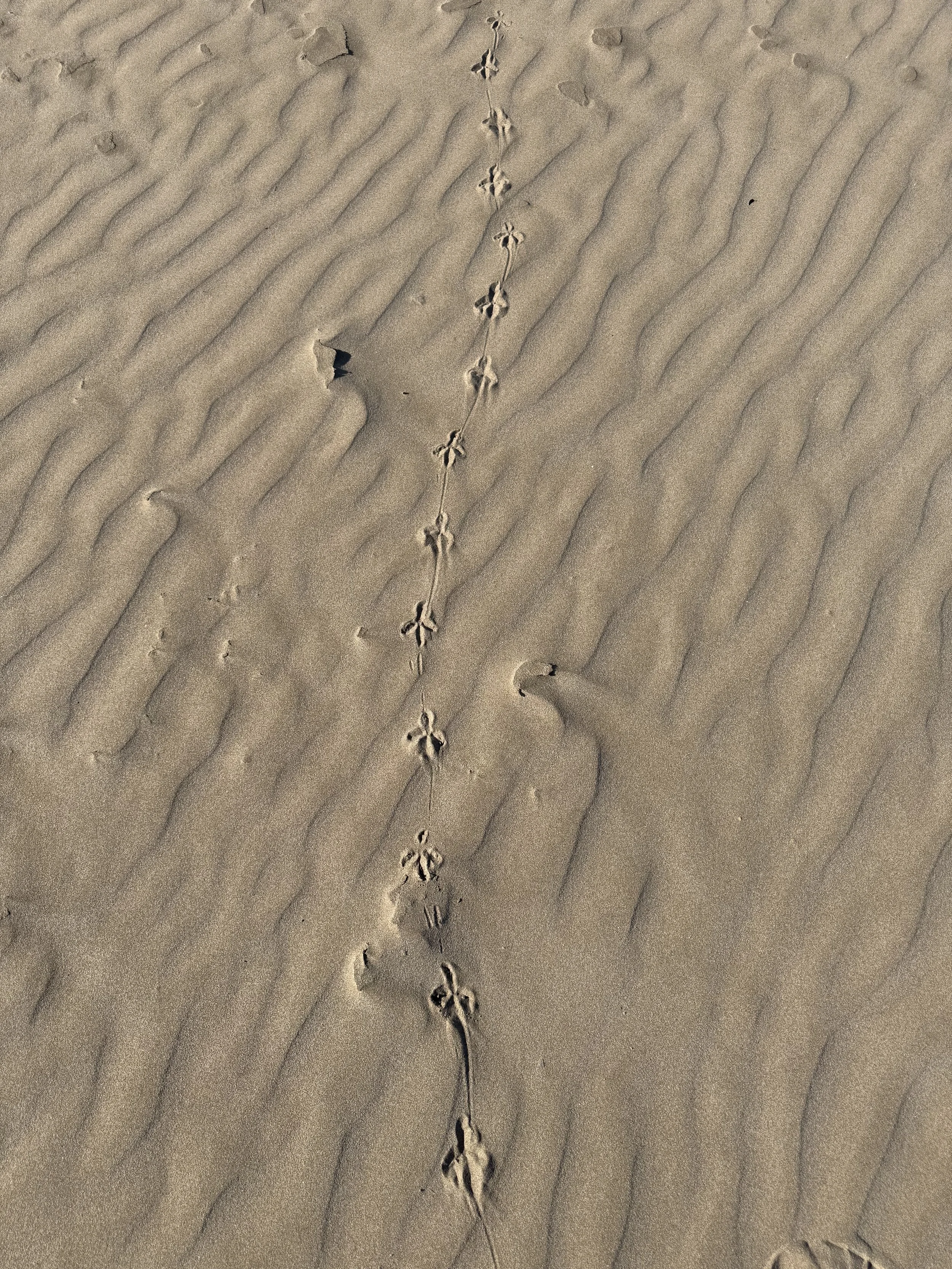
We begin by returning to history, to inherited stories, because understanding the legacy we’ve been given creates more perspective in realizing our own agency to choose what we want to carry forward. We begin to notice the identities that were shaped around belonging, achievement, caretaking, perfectionism, or self-protection. We develop compassion for the ways those identities once served us, while also asking whether they are still the ones that support the live that allows us to live fully into our purpose. We also get deeper perspective about the different versions of you that have existed, and the one you are emerging into.
This is why expansion starts with curiosity, then deconstruction. And in deconstruction work, rather than dismantling Self, we are excavating; remembering parts that have been buried in favor of survival or connection in an environment that couldn’t make space for all of you.
At times these most precious parts can be the cost of surviving in systems that struggle to accommodate our full autonomy and complexity. We are identifying the layers of conditioning or adaptation that have made it challenging to see ourselves clearly, so that we can make space and increase capacity to live life in fuller contact with our whole self.
We might ask, with curiosity rather than judgment, "Did I choose this? Does it still feel true? Is this how I want to continue living?" Asking more expansive questions facilitates the loosening of our grip on identities that have offered belonging, competence, and safety, but at a cost of self-authorship and autonomy.
Self-authorship is in part about unearthing the courage to remain present long enough to discover what is already there beneath expectation, adaptation, and fear. It's learning to recognize the voice that has been with us all along, along with the capacity for joy, love, irreverence, boldness, creativity, sacred rage, and rebellion.
I don't think the question "Who am I, really?" is one that we answer once and then move on from. I think it's a question we return to throughout our lives, because we are always changing, always growing, always encountering new seasons that ask something different of us. Self-authorship is an ongoing practice of meeting those moments with enough honesty to ask whether the life we're living still reflects the person we're becoming.
Before we can author our lives, we inherit them. Perhaps the work is to hold the stories gently enough that we can decide, with increasing clarity and compassion, what we want to write next.
WAYS TO WORK WITH ME:
Online somatic and soul-centered counseling, yoga, and Brainspotting for women located in Bend, Oregon and the state of Oregon. Click here to schedule a free consultation.
Read more about sacred becoming therapy here and my approach to working with cycle breaking women here.
Enter your email at the bottom of this page to stay up to date on offerings!